


Gloria Rivera
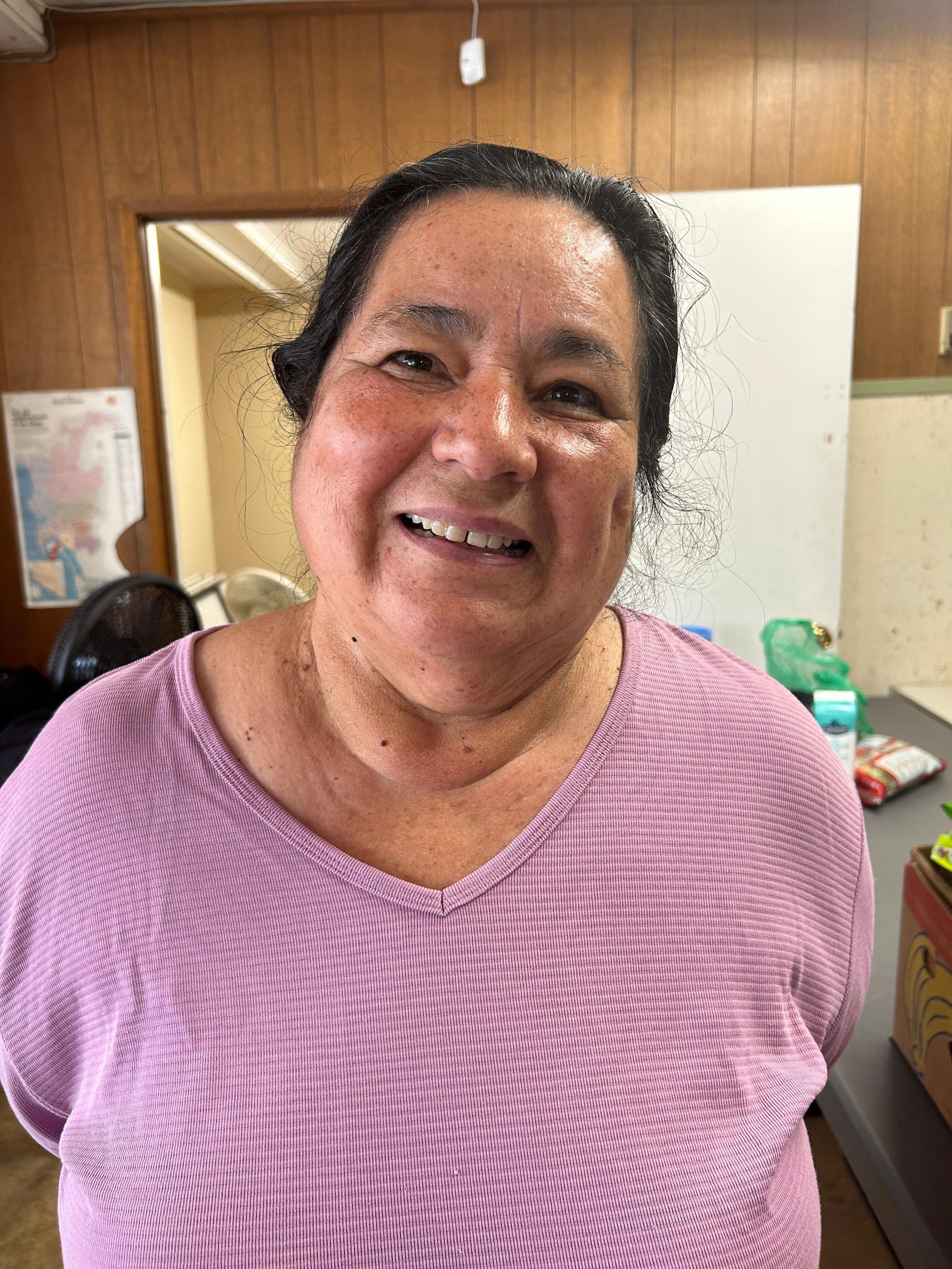
Gloria Rivera: A Story of Faith, Resilience, and Service
Gloria Rivera is not a woman who seeks attention. She speaks simply, serves quietly, and carries her faith with a humility that often masks extraordinary courage. Yet when her story is told with care, it reveals a testimony shaped by suffering, perseverance, and an unwavering trust in God—a testimony that now blesses the ministry of the Lutheran Mission Society San Diego and the wider church.
Roots in Mexico: A Small Place, a Strong Foundation
Gloria’s story begins in Mexico, in a place she remembers with warmth and simplicity.
“Yo soy de un estado de los más chiquitos de México,” she says. “Se llama Colima.”
She lived there for about eight years before her family moved to Magallanes, a small town roughly forty kilometers from Puerto Vallarta.
Those early years were marked by frequent moves, yet they were grounded in a different kind of stability. Gloria, the eldest of twelve children, grew up in a home where respect mattered deeply and responsibility came early. Her father, whom she recalls with reverence, modeled authority and consistency—not perfection, but presence. While rumors and whispers might have swirled around her family, Gloria insists that what she experienced was discipline, structure, and a steadfast sense of family that shaped her understanding of life and faith.
From a young age, Gloria learned to care for others. As the eldest, she carried responsibility quietly, watching over her siblings and learning endurance long before she could articulate it. Her faith took root in the Catholic Church of her childhood—familiar, inherited, and present, though not yet deeply personal.
Long before she understood fully the person and work of Jesus Christ, Gloria had already formed a moral conviction. Watching her parents—especially her father—she learned that respect was not optional. It was lived, demanded, and protected. That conviction stayed with her. Years later, when her own children were born, she carried this resolve quietly but firmly: her children would grow up in a home where dignity mattered, where harm was never normalized, and where what was right would always be upheld, no matter the cost.
Marriage at a Young Age and the Reality of Violence
At only fifteen years old, Gloria married. What she had hoped would be a source of stability and love became instead a place of pain. Her marriage was marked by domestic violence and emotional suffering. She endured far more than a young woman should, carrying fear, silence, and constant concern for how her children were being shaped by what they witnessed at home.
What sustained Gloria during those years was a fierce commitment to her children. She wanted them to grow up with the respect and dignity she had known as a child. When the violence threatened to define their future, she made the difficult decision to leave. It was not an impulsive escape, nor a decision made lightly—it was an act of protection and love.
When Gloria finally left, something within her settled—not anger, but resolve. She would endure hardship herself rather than allow violence to shape her children’s understanding of life, love, or God.
Migration, Separation, and the Fight for Her Children
Like many immigrant mothers, Gloria faced the painful reality of separation. She came to the United States first, carrying the weight of distance, absence, and a guilt only a parent can fully understand. Later, she brought her children with her, determined to build a safer life.
Years afterward, one of her daughters spoke words that quietly affirmed Gloria’s sacrifice:
“Mom, thank you for not leaving us with that man.”
Those words—spoken after her children had come to understand their father in a more complex light—confirmed that Gloria’s painful decisions had also been faithful ones.
In the United States, Gloria labored tirelessly. She worked long hours in construction in Orange County, enduring physically demanding days and balancing the responsibilities of raising her children alone. Her life revolved around work and family. All six of her children grew up there, built their lives, and eventually moved away. Today, Gloria experiences their physical absence not as abandonment, but as the quiet fruit of lives launched into the world.
God also blessed her with a faithful and caring husband, Gilberto. Together, they share a partnership rooted in mutual respect, trust, and love—an anchor in the later chapters of her life.
A Faith Deepened Through Breaking
Although Gloria had known God since childhood, her relationship with Him deepened through suffering. There were moments of physical pain, emotional exhaustion, and raw, unfiltered prayer—moments when her words before God came from desperation rather than devotion. She prayed for relief, protection, and strength she did not feel she possessed.
One moment marked a turning point. A severe back injury forced Gloria to stop working. The relentless motion of survival came to an abrupt halt. In the quiet imposed by pain, she prayed—not with rehearsed words, but with honesty and vulnerability. In that season, she experienced something she still finds hard to fully explain: a profound awareness of God’s presence, a sense that she was not alone, even in suffering. The suffering of the crucified Jesus became a source of hope, consolation, and purpose. From that moment on, prayer was no longer only an emergency response; it became a rhythm of her life.
Slowly, Gloria came to recognize that God had been walking with her all along—not merely as a distant figure from childhood religion, but as a living presence who listens, guides, forgives, and heals.
A New Church Home and an Unexpected Welcome
Eventually, Gloria settled in southeast San Diego, where she found Trinity Lutheran Church—the oldest LCMS congregation in the area and, providentially, close to her home. At first, she stood out. Though the congregation reflected signs of a multicultural family, she was the only Hispanic woman regularly participating.
Pastor Henderson, who welcomed her warmly, was deeply committed to mission. Under his leadership, Gloria became involved wherever help was needed—preparing food for the poor, assisting in thrift sales, participating in Bible studies. During the COVID-19 pandemic, when many ministries paused, Gloria continued to serve faithfully, joining Zoom gatherings even when the church doors were closed.
Gloria approached the Lutheran faith with a religious background that blended her early Catholic experiences with later involvement in Pentecostal congregations. She wrestled with new beliefs and practices—questions about women serving as pastors, the emphasis on certain spiritual gifts, and other doctrinal differences. Yet instead of leaving, she asked questions and listened. She encountered a community marked by integrity, humility, and genuine care. Over time, her resistance softened—not through pressure, but through patient teaching and faithful shepherding.
Loss, Encouragement, and the Call to Continue
This season of growth was also marked by grief. Pastor Henderson passed away from cancer, a loss deeply felt by both the congregation and Gloria. Soon after, Perla—a close friend from church—also died. Before her passing, Perla left Gloria with a simple but enduring charge:
“Don’t give up. Keep serving the church.”
Those words took root.
When Pastor Rick Stark arrived at Trinity, Gloria once again found reassurance. She was welcomed, valued, and encouraged. Under his leadership, her service found new expression—especially through the food pantry and the growing Spanish-speaking Bible study, which became the answer to years of prayer for both Gloria and the congregation.
Listening to a Missional Desire: The Role of LMSSD
As Gloria became more rooted at Trinity, a quiet longing emerged. She could not ignore the reality around her. Trinity Lutheran Church sits in a Spanish-speaking neighborhood, surrounded by families and individuals who speak little or no English. These were her neighbors—people like her, carrying questions, pain, and hope—but lacking a space to hear God’s Word in their own language. She worried for her husband, Gilberto, who was new to the faith and often left without fully understanding God’s Word at church.
Gloria expressed a simple desire: that there might be a place where Spanish-speaking neighbors could understand the Bible, hear about Jesus, and pray in their mother tongue.
The Lutheran Mission Society San Diego listened, and Trinity Lutheran Church embraced her vision. Gloria, already leading the food pantry ministry, became the bridge for something greater: a ministry birthed from her relationships and trusted presence in the community.
LMSSD recognized Gloria not merely as a faithful member, but as a person of peace—someone deeply connected to her community, trusted by neighbors, and gifted at gathering others. Rather than asking her to become something she was not, LMSSD affirmed who she already was: a missionary presence rooted in relationships.
Through LMSSD, Gloria partnered with Deaconess Intern Karen Swift, whose passion is teaching God’s Word with clarity, compassion, and cultural sensitivity. Together, Gloria and Karen formed a complementary team: Gloria opened doors through trust and hospitality, arranging safe spaces and welcoming neighbors with Mexican coffee, ginger, and pan dulce; Karen brought theological depth and a heart for Scripture.
This ministry did not operate in isolation. It was supported by Pastor Rick Stark and accompanied by LMSSD’s missionary leadership—an expression of collaboration, discernment, and shared vision rather than imposition. What emerged was a ministry born from listening: a Spanish-language Bible study where Scripture is explained, Jesus is proclaimed, and prayer flows in the language of the heart. And yes, Gilberto was the first to sign up, eager to grow in faith alongside his wife.
A Quiet Missionary Presence
Today, Gloria Rivera lives out her calling as a quiet missionary. She does not seek recognition. She serves. She listens. She shows up. Through her steady presence—and through the discernment and support of LMSSD—Trinity Lutheran Church has gained a bridge between cultures, languages, and generations.
Her story is not loud. It is faithful. It is shaped by suffering, sustained by grace, and lived out through service. In Gloria’s life, the gospel is not proclaimed with a microphone—but it is clearly visible.
Through her continued ministry, the church is reminded that God often builds His mission through simple faith, faithful hands, and people willing to say yes—people like Gloria, walking long roads, opening doors, gathering neighbors, and creating spaces where others may hear the Word of God and the good news of Jesus Christ in their own language.