


Mary Tripp
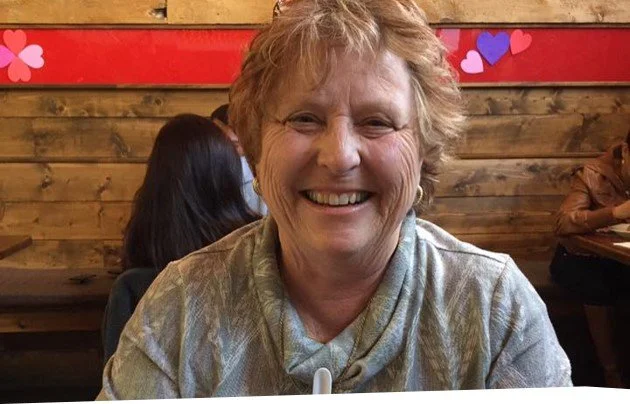
The Neighbor We Did Not Choose: The story of Mary Tripp
There are stories that begin with clarity. This is not one of them.
Mary’s story begins with a crossing. Not the kind that makes headlines. A quieter crossing. The kind that unfolds over time. The kind that happens when a woman, raised in the steady rhythms of Midwestern Lutheran life, finds herself—almost imperceptibly at first—walking away from what once held her.
Minnesota. A mother who taught in a Lutheran school. A childhood shaped by faith, though not yet fully owned—more inherited than lived. Then movement. Chicago. A different pace, different priorities. Ambition slowly taking center stage as she was climbing the corporate ladder. A first marriage that did not hold. A second that, at moments, seemed like it might follow the same path. If you were to pause her story there, you might assume the trajectory. Another life pulled between devotion and distraction, the kingdom of God and the kingdoms of this world, never quite choosing either, never fully rooted.
But God is patient with divided hearts.
Following her husband, Mary moved to San Diego—a transition that, like many others in her story, felt ordinary on the surface but would later prove formative. There, even as her husband was not yet walking in the Christian faith, she became part of Prince of Peace Lutheran Church, stepping into the life of the congregation in quiet but meaningful ways, including helping her pastor lead the youth group in those earlier years. Unfortunately, beneath that involvement, her personal life was far from steady. Her marriage was under strain, deep enough to shape everything. Even as she showed up, served, and remained connected, there was a deeper instability shaping her days, a tension between what was visible in church life and what was quietly unraveling at home.
Later, she transferred to St. John Lutheran Church in El Cajon, where she remembers her time under Pastor David Petersen with particular affection. When he later joined the LCMS and moved to Christ Lutheran Church in La Mesa, she followed as well, trusting it was the right step. And then, somewhere along the way—in a Bible study, not particularly flashy but steady and consistent— Mary began to listen to the Word in a more disciplined way. Daily. Slowly. The kind of listening that doesn’t immediately change your circumstances but begins to rearrange your center of gravity. She did not walk that path alone. Her husband, Bob, embraced the faith and stepped into that same current beside her. Side by side in the Scriptures, in a faith no longer inherited but lived, wrestled with, practiced.
And then, as often happens in Scripture, longing enters the story.
They wanted children. Years passed. Nothing changed. If you know the patterns of Genesis, you know that sometimes barrenness becomes spiritual ground, where control dies slowly and promise begins to speak in deeper ways. In that waiting came an unexpected opening. An article. A Christian adoption agency. A room full of photos, each couple choosing—until someone interrupted gently: You think you are choosing. But God has already chosen for you.
That sentence stayed.
They chose a boy from Uzbekistan. Raville. Red hair. A face that settled deeply into Mary’s heart. They prayed for him—not casually, but persistently. For years. And then the doors closed. The process stalled. The path that once seemed clear simply ended. So they began again. Russia. Another child—Misha. “He’ll be home by Christmas,” they were told. He wasn’t. Delays came. Complications followed—the kind that slowly teach you control is an illusion. Another name. Another face. Valeria. This time, the answer came. Travel. Waiting. Paperwork. Holding one child, returning for another. Misha was finally entrusted to them. A family formed—not all at once, not cleanly, but in pieces. In uncertainty. In prayers that seemed unanswered until suddenly, they weren’t.
And still—Raville. Ten years of prayer for a child she would never hold. So they went searching. Uzbekistan. Dust and distance. Doors opening in improbable ways—even the Secretary of State, Condoleezza Rice, became involved. But when they arrived—he was gone. He had run away, vanished into a country that does not easily release its lost. It is one of those moments that defines a life: when every effort aligns, every hope is carried forward—and the answer is absence.
But Mary story does not end there. Because while she searched for the child she thought she was sent to find, another appeared. Andrey. Not chosen. Not planned. But given. And slowly, the shape of her life changed. Three children. Same age. Different countries. A family formed by providence more than planning. Bob and Mary carried that calling together—not only bringing children home, but learning to receive the ones God entrusted to them, even when the story did not unfold as imagined.
Years passed. A business grew. Life stabilized. Ministry did not arrive as a program. It happened in conversations, relationships, quiet witness. Bob was there in it all—partner in work, in faith, in steady obedience. And then, loss. Bob died in 2015. The house did not change size, but it changed meaning. Rooms once filled with life now held silence. It would have been understandable to retreat inward. But that is not how this story unfolds. Because long before she ever stepped into an apartment in East San Diego, God had already been preparing her—through waiting, loss, and the quiet undoing of something she once carried without questioning it.
She does not soften that part.
She was the one who would cross the street. Avoid. Turn the other direction when she saw Muslims. In a sense, she carried the common prejudices many do—quiet assumptions shaped by distance and fear. But beneath that, she carried a private frustration: at least in part, she blamed them for the loss of Raville, the doors of a Muslim country having closed just as everything was ready for adoption. And yet, God changed her heart. Not all at once. Not through argument. But through Scripture, through exposure, through the slow reshaping of how she saw people. By then, she had learned something essential: the people God gives you are not always the ones you would have chosen.
So when the question came in —Who is my neighbor?—it did not remain abstract. She had just been sitting in a Bible study, wrestling with that very question in a concrete way. Not as theory. As something that demanded an answer.
And almost at the same time, the invitation came.
At Christ Lutheran Church in La Mesa, Pastor Nader had come to speak about Afghan refugees arriving in East San Diego—their displacement, their needs, and the opportunity before the church. It was through those conversations, through that moment of awareness meeting real need, that Mary was invited to step in. The question and the people met at the same time. She did not receive a long explanation. She received an answer: They are.
So she went to the park. At first, it was simple. Showing up. Watching. Learning how to be present without knowing what to do. Families rebuilding life from almost nothing—people she once would have avoided entirely. Now, she stepped toward them. It began with something ordinary. A couch. Old. Unwanted. Until a refugee family said yes. She found a truck. Bill showed up. Together, they carried it to a small second-floor apartment. No furniture. No shared language. Three teacups for a room full of people. And yet—they offered tea. She sat on the floor, unsure how she would stand back up. Bill beside her. Both aware this was no longer about a couch. They were being received. And in being received by those who had so little, she began to see what was actually needed. Not just furniture. Everything.
From there, the ministry did not launch—it grew. Through repeated yeses. Dennis opened his garage. Mary opened hers. Bill kept showing up with his truck. Lucy gathered women at the park. Crafts became bridges. Presence became the method. And the park became a rhythm. Sunday afternoons. Week after week. Dennis with the men. Karen with the children. Mary sitting with the women—learning to communicate beyond words, allowing trust to grow slowly. It was not a formal program. But it was deeply intentional. What would later be called Mission Salaam was, at the beginning, simply people responding to the needs in front of them. Delivering furniture. Sitting in the park. Listening. Returning again the next week.
As trust grew, spaces expanded. Homes began to open—Mary’s among them. Tea shared across living rooms. Conversations deepening. The children’s Bible becoming a bridge. Her home, once marked by silence, changed again. It filled with voices. With movement. With people. Not just visitors—but residents. An Afghan family lived there for a season. Shared meals. Shared life. And somewhere along the way, something deeply personal took shape. Her own children had not given her grandchildren. But now—these children. Running through her home. Returning again and again. Sitting close. Laughing freely.
And she received them as her own.
Not by blood.
But by grace.
Today, the work continues. Mission Salaam is a volunteer organization reaching out to Afghan refugees in San Diego. The team relies on donated home goods, furniture, clothing, shoes, and bicycles to meet the needs of those recently settling here. Each donation—carefully chosen, clean, functional—is a tangible way to show care and welcome. Yet the heart of the ministry remains relational: volunteers walking alongside families, sharing life, listening, and showing Christ’s presence in practical ways.
The work is not perfect. Not neat. Relationships shift. Some remain. Others drift. Even within Mary’s own family, tensions continue to unfold. But perhaps that is the point. God rarely builds through straight lines. He works through what is unfinished, through what is lost and never found, through people we would not have chosen, through small acts repeated over time. Through a husband who walked beside her. Through friends—Bill, Lucy, Dennis—who stayed.
And now, the ministry prays for the next step: a missionary who can speak Farsi or Dari, someone who can help guide and support the team of volunteers, connecting more deeply with the families they serve, and expanding the circle of care that began in Mary’s living room and the local park.
Mary once set out to find a child named Reville. She never found him. But God gave her something else: a family she did not expect, a community she did not plan, a ministry she did not build alone. A life that now quietly proclaims what she once struggled to believe: that the neighbor is not the one we choose. It is the one God places in front of us.
And sometimes, if we are willing to sit on the floor long enough, we begin to see: we were never the ones bringing the gift. We were the ones being invited in.
The Lutheran Mission Society San Diego did not recruit Mary. Mission Salaam did not begin because of us. But through our service to the Lutheran churches in San Diego County and Tijuana, we were invited to walk alongside the volunteers of Mission Salaam, to support and help develop the ministry they had already begun. In that process, we met Mary.
She and her team have found in our family of missionaries a place of belonging, encouragement, and connection with like-minded people—others called by God to make a difference. We are thrilled to walk alongside them, to witness what God is doing through their faithfulness, their courage, and their love for neighbors they would not have chosen, but whom God placed before them. Together, we continue to see how ordinary acts of obedience, repeated over time, can grow into something extraordinary.