


Dennis Wetjen
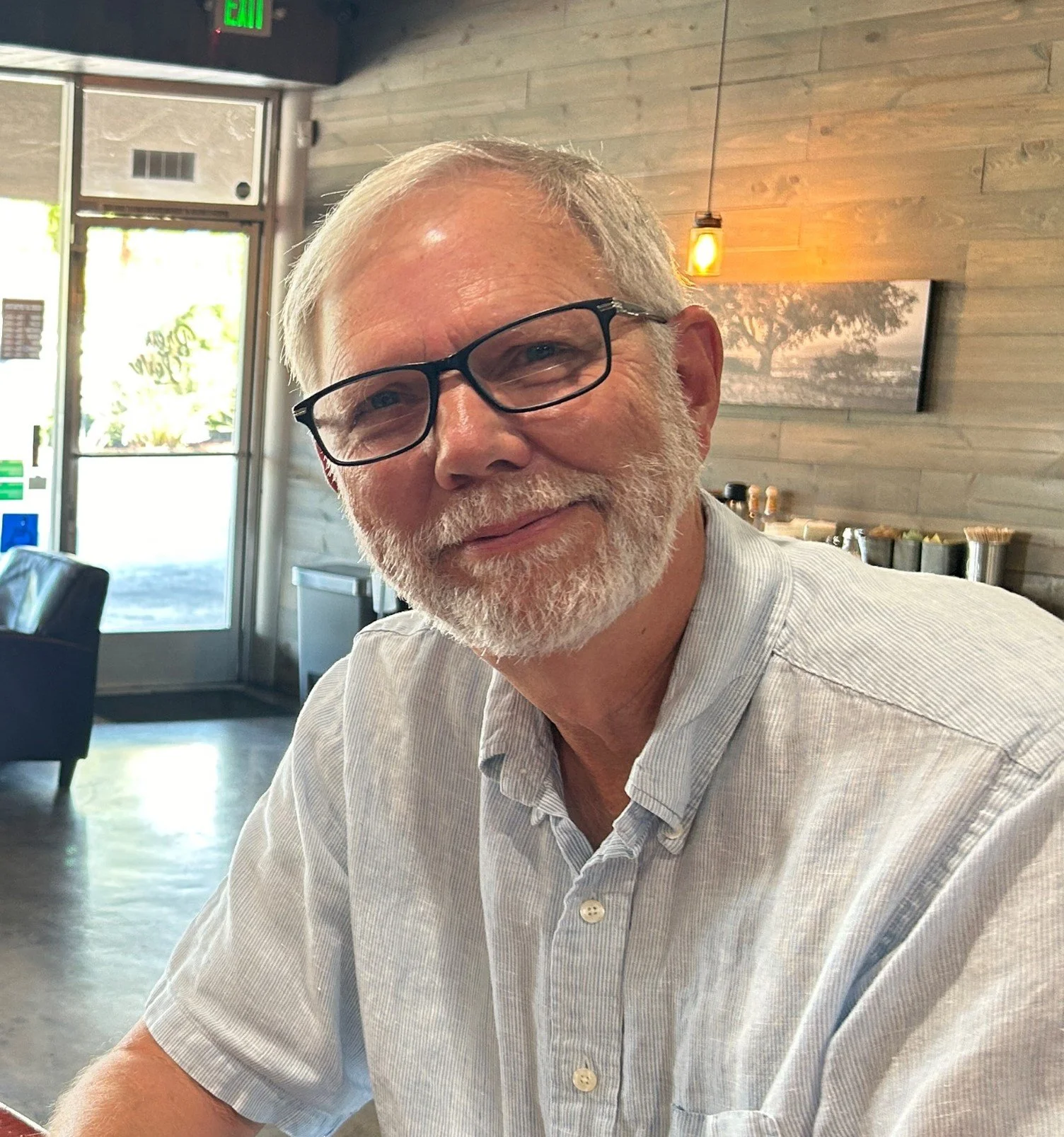
The Third Cup of Tea: The Journey of Dennis Wetjen
The mornings in rural Iowa had a rhythm to them.
Before the sun fully rose, frost clung to the fence posts, and the fields stretched out in quiet obedience to the seasons. On that farm, life was simple, structured, and predictable. Dennis Wetjen was the oldest of five boys, and responsibility came early. Chores weren’t optional; they were part of the fabric of life.
Across the road from the church stood a small schoolhouse—two rooms, one for the younger children and one for the older. That was where Dennis spent his days. It wasn’t much by modern standards, but it was enough.
One day, in his eighth-grade year, something unusual happened. His teacher, juggling multiple grades, handed him a lesson plan and said, “Would you be willing to help?” And just like that, Dennis became a teacher. There he was—a farm boy, barely a teenager—standing in front of second graders, teaching English. It wasn’t formal. It wasn’t polished. But something clicked. He enjoyed it. And more importantly, someone noticed.
His pastor saw it. Called it out. Encouraged it. Sometimes God doesn’t shout. Sometimes He simply nudges—through a teacher, a pastor, a quiet opportunity.
Dennis followed that nudge to Concordia University, Seward, Nebraska. It felt familiar—still rural, still grounded. There, in the middle of cornfields and college life, another piece of his story unfolded: he met Karen. Their lives intertwined, got married and together they began building a life shaped by calling, faith, and service.
After graduation, Dennis received a call to teach in Southern California. That alone felt like a leap. From the quiet fields of Iowa to the spread-out, sunlit landscape of San Diego—everything was different. The pace. The people. The rhythm of life. He was stepping into a different world.
He was called to teach fifth grade at Christ Lutheran School in La Mesa, a community tucked into the eastern part of San Diego County. What he could not have known at the time was that this place would shape him just as much as he would shape his students. Rows of desks. Chalk dust in the air. The low murmur of students settling into their seats. It wasn’t the two-room schoolhouse of his childhood anymore—but the essence was the same: Children. Curious. Restless. Full of questions. And so began fourteen years of faithful teaching. From 1973 to 1984, Dennis stood in front of fifth graders day after day, year after year. Lessons were taught. Papers graded. Discipline handled.
But beneath the routine, something deeper was forming. He was learning patience. Learning how to speak so that young minds could understand. Learning that teaching was never just about information—it was about formation. It was about seeing each student not just as a learner, but as a person. Those years were also filled with life beyond the classroom. Dennis and Karen were raising their family, navigating the joys and pressures of life together. It was a good life. A stable life. A life that made sense. And yet, quietly, beyond what Dennis could see, God was preparing something more. God was not finished stretching the boundaries.
Years later, a letter arrived—unexpected, uninvited. Someone had recommended Dennis for a position at Hong Kong Lutheran International School, a famous place of education he had heard of, but never imagined himself going to. He hadn’t applied. He hadn’t even considered it.
At first, the answer was no. The timing was all wrong. A newborn child. A sick father-in-law. A new home. But God, in His quiet persistence, opened the door again. This time, Dennis and Karen sat at a restaurant in Mission Valley. Over a meal, they made a list—pros and cons, staying and going. It was thoughtful. Practical. They said yes. Just three years, they thought. They packed their lives, gathered their children, and stepped into a world that couldn’t have been more different from rural Iowa—or even suburban San Diego.
Hong Kong was alive. The streets pulsed with energy. Languages overlapped. Cultures collided. It was crowded, fast, and overwhelming. But the real transformation didn’t happen in the streets. It happened in the classroom. Twenty-five students sat in front of him, from different nationalities, cultures and faith traditions. Hindu. Muslim. Jewish. Christian. Some with no religious background at all. A world in one room.
One of his strongest students was Muslim—deeply knowledgeable in Old Testament stories, though with a different telling. Abraham, in his tradition, offered Ishmael, not Isaac. And Dennis realized something. He couldn’t teach the way he always had. He couldn’t say, “We believe.” Instead, he began saying, “I, as a Christian, believe…” It was a small shift. But it changed everything. It created space instead of tension. It invited conversation instead of confrontation. It planted seeds that only the Holy Spirit could bring into fruition.
And in the process, it changed him. He began to listen more. To ask more questions. To learn about his students’ countries, their cultures, their leaders. He realized that many of them knew far more about America than he knew about their homelands. His world expanded. Three years became five. Five became ten. Ten became eighteen. His children grew up in that environment—becoming what we now call “third-culture kids,” shaped by multiple worlds. And Dennis, once a farm kid from Iowa, became a student of the world.
Eventually, they returned to San Diego.
Life settled again—at least on the surface. Teaching continued. The rhythms of life resumed. Then came retirement. For many, retirement is a closing chapter. For Dennis, it was an opening. He began driving for Lyft. It wasn’t meant to be ministry. But God has a way of turning ordinary spaces into sacred ones. Passengers entered his car carrying more than bags. They carried burdens. Hospital visits. Uncertainty. Fear. And Dennis would ask, gently, “Would you mind if I prayed for you?” Not once did anyone refuse. Inside that car, prayers were spoken. Quiet. Simple. Real.
And then, another door opened.
Afghan families began arriving. Refugees. Strangers. People carrying stories of loss, displacement, and hope. It started small—a laptop for a young man. But soon, the need multiplied. Families needed everything: furniture, clothing, basic necessities. Dennis’ garage became a storage unit. Another home overflowed with furniture—sofas on end, tables stacked, chairs tucked into every corner. And at nearly 75, Dennis found himself lifting couches, loading trucks, delivering beds. If someone had told him years ago that this would be his life, he would have laughed.
But here he was. Not because it was easy. But because it mattered. The physical strain is real. It’s not easy. Not at this stage of life. And yet, in a way he did not expect, even that has become part of the call. The aches, the effort, the sweat—it all comes with the same quiet conviction that has followed him throughout his life: when God calls, He does not always call you to what is comfortable… but to what is faithful.
This work eventually became known as Mission: Salam. It was never the effort of one person. What began with simple acts of care—helping a young man with a laptop, meeting families in parks, handing out diapers—grew into a shared calling. Dennis, Mary, and a team of dedicated volunteers began walking alongside Afghan families together, each bringing their own gifts, their own time, their own hearts.
Many of them were connected to Christ Lutheran Church in La Mesa, where Dennis had taught years earlier. But the work did not stay contained within one congregation. Partnerships began to form—with other churches, with individuals, and with the broader network of the Pacific Southwest District.
For us at the Lutheran Mission Society San Diego, this was not a ministry we had the privilege of starting. It was something already alive. Already bearing fruit. And we were invited into it. Invited to nurture it. To walk alongside it. And what a privilege that has been. Because Dennis, Mary, and this team are, in every sense, local missionaries. They were already serving, already building relationships, already embodying the Gospel in San Diego long before many others noticed.
Today, they continue to serve not only the Afghan community, but also the wider Church—offering a model, an encouragement, and a quiet challenge to what mission can look like. Not distant. Not abstract. But personal. Relational. Mission: Salam stands as a testimony that sometimes the most powerful mission fields are not across the ocean—but right in front of us.
Dennis learned that ministry doesn’t begin with words—it begins with presence. There’s a phrase that stayed with him from Three Cups of Tea: The first cup—you are a stranger.
The second—you are a guest. The third—you are family. That became the model. Not quick conversations. But time. Meals. Shared work. Truck rides that turned into conversations. Furniture deliveries that turned into friendships.
One day, while waiting at a storage facility, a man said to him, “Jesus will give you many points for what you are doing.” Dennis smiled. “I don’t need points,” he said. “My ticket has already been paid.” That led to a deeper conversation about grace. Not earning. Not striving. But receiving. Another time, sitting on a balcony after a meal prepared just for him, a young woman named Samira asked, “Aren’t you afraid of dying?” Dennis answered simply, “No. Because I know where I’m going.” She couldn’t understand it. And that was the moment.
Not argument. Not debate. Just witness.
In homes now, children run up to him, talking all at once, sitting close, treating him as if he belongs. Because he does. The third cup has been shared. Family. Through Mission: Salam, Dennis Wetjen has helped more than 300 families. He has carried furniture—but more than that, he has carried stories. He has listened. Learned. Loved.
And through it all, he sees what he could not see back on that farm in Iowa.
God was always at work.
In the small schoolhouse.
In the classroom in La Mesa.
In the crowded streets of Hong Kong.
In the quiet prayers inside a car.
In the living rooms of Afghan families.
This is not the story of a man who set out to change the world. It is the story of a man who kept saying yes. Yes to a classroom. Yes to a call. Yes to a conversation. Yes to a stranger… until the stranger became family. And somewhere along the way, through all those yeses, God wrote a story far bigger than anything Dennis could have imagined.
A story still being written— one cup of tea at a time.