


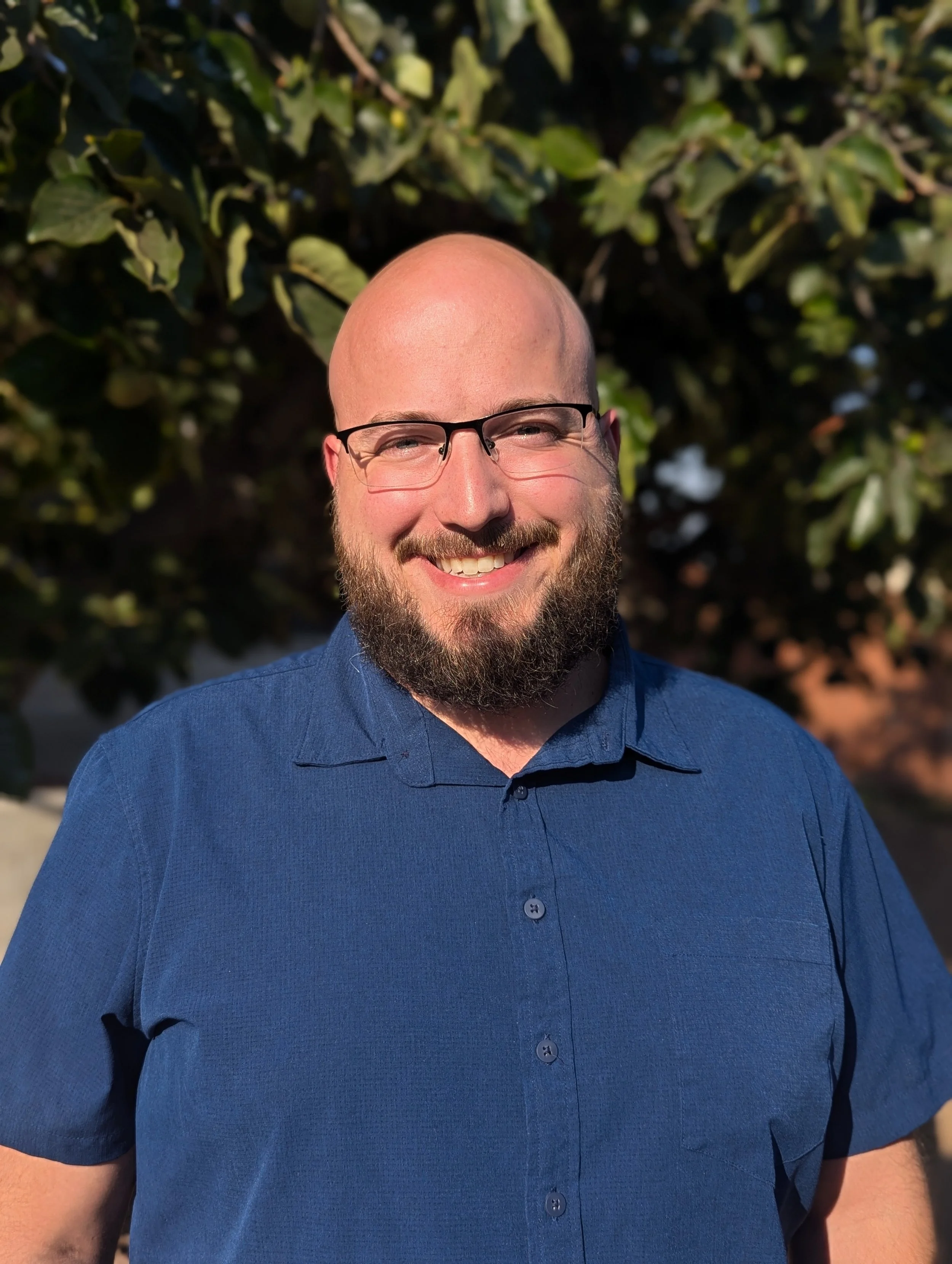
Alex Parker
Some missionaries are shaped in dramatic moments.
Others are shaped quietly.
In the forests and valleys of the Pacific Northwest. In youth rooms. In conversations after church. In families that simply keep showing up Sunday after Sunday.
That is part of Alex Parker’s story.
Alex was born and raised in Vancouver, Washington, the oldest child in a Lutheran family. His world was one of mountains, hiking trails, rainy skies, church potlucks, and suburban neighborhoods. Faith was never something exotic or distant. It was woven into ordinary life.
And maybe that is why ministry eventually felt less like a lightning strike and more like a road God had quietly been paving for years.
As a teenager, Alex found himself drawn not only to church, but to the people inside it. Many of his closest friendships came through the church community. He watched pastors and youth leaders not simply organize programs, but walk patiently with people. One figure especially stood out to him: the Director of Christian Education.
At first, the attraction was almost humorous.
“What do you do for a living?”
“I work with youth and play games.”
Alex remembers thinking: Wait… you can do that for a job?
To a teenager, it sounded almost too good to be true.
Games. Trips. Fun.
But when he entered DCE training at Concordia — first in St. Paul, and later in Portland — he discovered something deeper behind the scenes. Ministry was not built on entertainment. It was built on prayer. Presence. Teaching. Long conversations. Trust. Walking with families through suffering and joy. Helping young people wrestle with faith honestly.
The work was holy in quieter ways than he expected.
Along the way, Alex also met Kelsey, whom he had first known in high school. As ministry and life slowly unfolded together, so did their shared sense of calling. Years later, while serving in Chula Vista, they would welcome their first daughter, Josephine — another reminder that ministry for Alex was never simply about programs or church work, but about family, relationships, and the slow building of a faithful life.
After finishing his DCE training, Alex accepted a call to serve at Concordia Lutheran Church in Chula Vista, California, where he continues serving today. And somewhere along the way, the Pacific Northwest kid found himself learning ministry on the edge of the borderlands.
Concordia shaped him further.
The congregation’s heart for family ministry resonated deeply with him. Children worshiped alongside parents. Sermons intentionally engaged young listeners. Faith was not outsourced to programs alone; it was practiced together.
Alex began realizing something important: the church does not simply need outreach or discipleship. It needs both.
The church must reach those who have not heard the Gospel — while also forming children and families deeply enough that they themselves become witnesses of Christ in the world.
That conviction slowly began shaping his ministry.
Then came COVID.
Outdoor services. Disrupted routines. Questions about communion, catechesis, and spiritual formation. Alex noticed many parents hesitating about confirmation instruction, and he realized something uncomfortable but honest: many adults themselves had not revisited the basics of the Christian faith in years.
So he began teaching differently.
Not only to children.
To entire families.
Week after week, he developed simple catechism messages with visual object lessons. Sometimes he walked children through the sanctuary itself — stopping at the cross, the baptismal font, and the communion table — teaching the means of grace not merely as abstract doctrines, but as realities physically surrounding them.
And something beautiful happened.
The children remembered.
But so did the parents.
Families began speaking about faith together.
Questions continued after church.
The sanctuary itself became a classroom of grace.
Somewhere in that process, another realization quietly emerged inside Alex: his calling was shifting. Not abandoning his identity as a DCE, but deepening into pastoral formation and theological leadership. At first, he received encouragement and affirmation from his pastor at Concordia, who recognized gifts in Alex that were pointing naturally toward pastoral ministry.
Still, the thought lingered for a while before bringing it up with his wife.
Her answer surprised him.
“I’ve been thinking about it too.”
That mutual discernment eventually led Alex into the CMC program as he prepared for pastoral ministry and cross-cultural mission work. What drew him most strongly was not status or title, but the program’s emphasis on outreach — especially among people different from himself.
Because by then, Concordia had already reshaped his imagination of the church.
The congregation did not look like the Lutheran churches he grew up in. It looked more like the neighborhood around it. English mixed with Spanish. Cultures overlapped. Families carried stories from different nations.
That reality also pushed Alex personally. Wanting to better communicate with the large Hispanic population surrounding the church, he began studying Spanish himself — another small but meaningful step toward becoming the kind of pastor and missionary rooted in the actual community around him.
And eventually, that same vision led Alex toward a ministry he initially did not even want to start.
ESL classes.
At first, he resisted the idea.
“Everybody does ESL,” he thought.
Even an experienced local pastor discouraged him, arguing the demographics did not justify it.
But Alex could not shake the sense that he should try anyway.
So he did.
Slowly.
Relationally.
Without grand strategies or flashy promises.
Today, every Wednesday night begins not with a lecture, but with dinner.
Around tables, people gather from different corners of the world — Hispanics, Brazilians, Russians, Ukrainians, and others. Alex helped form a team of volunteers who share the same vision. Some prepare food. Others sit with students to mentor, encourage, listen, and help them practice English.
The ministry is intentionally relational.
The goal is not simply language acquisition.
It is loving neighbors who need English as a second language, no matter where they come from, and building genuine relationships through which the love of Christ can naturally be shared.
And the stories keep emerging.
One Russian couple who were not Christians came to the Easter service.
One woman eventually brought her daughter, son-in-law, and grandchild to church with her.
People who first arrived looking for vocabulary slowly found community.
The ESL ministry was quietly becoming what faithful mission work often becomes: not a project, but a people.
Not marketing.
Not programs.
Presence.
The kind of ministry that grows slowly enough for roots to form.
The classes are growing steadily now, and there are already hopes of expanding the ministry in the coming season.
At the same time, Alex continues his pastoral studies through the CMC program and is now more than halfway through the process toward becoming a pastor.
When Alex entered the CMC program, the Pacific Southwest District invited the Lutheran Mission Society San Diego to help support and encourage the development of his missionary formation and outreach ministry. In many ways, there was actually very little for us to do. With the excellent training Alex receives through the CMC program and the strong support of his local congregation at Concordia, our role has mostly been to walk alongside him — offering connections, encouragement, insight, and the support of a broader missionary family.
And that alone has been a joy.
Because what is happening through Alex and Concordia is not merely one ministry growing. It is the multiplication of cross-cultural mission in South San Diego County. It is a glimpse of what can happen when congregations begin loving the actual communities around them with patience, humility, theological depth, and genuine presence.
And perhaps none of this should surprise us.
Because God often shapes missionaries long before they realize they are becoming one.
Sometimes in mountains and valleys.
Sometimes in classrooms.
Sometimes in sanctuaries full of children.
And sometimes around dinner tables where strangers from different nations slowly become neighbors.