


Michael Morabe
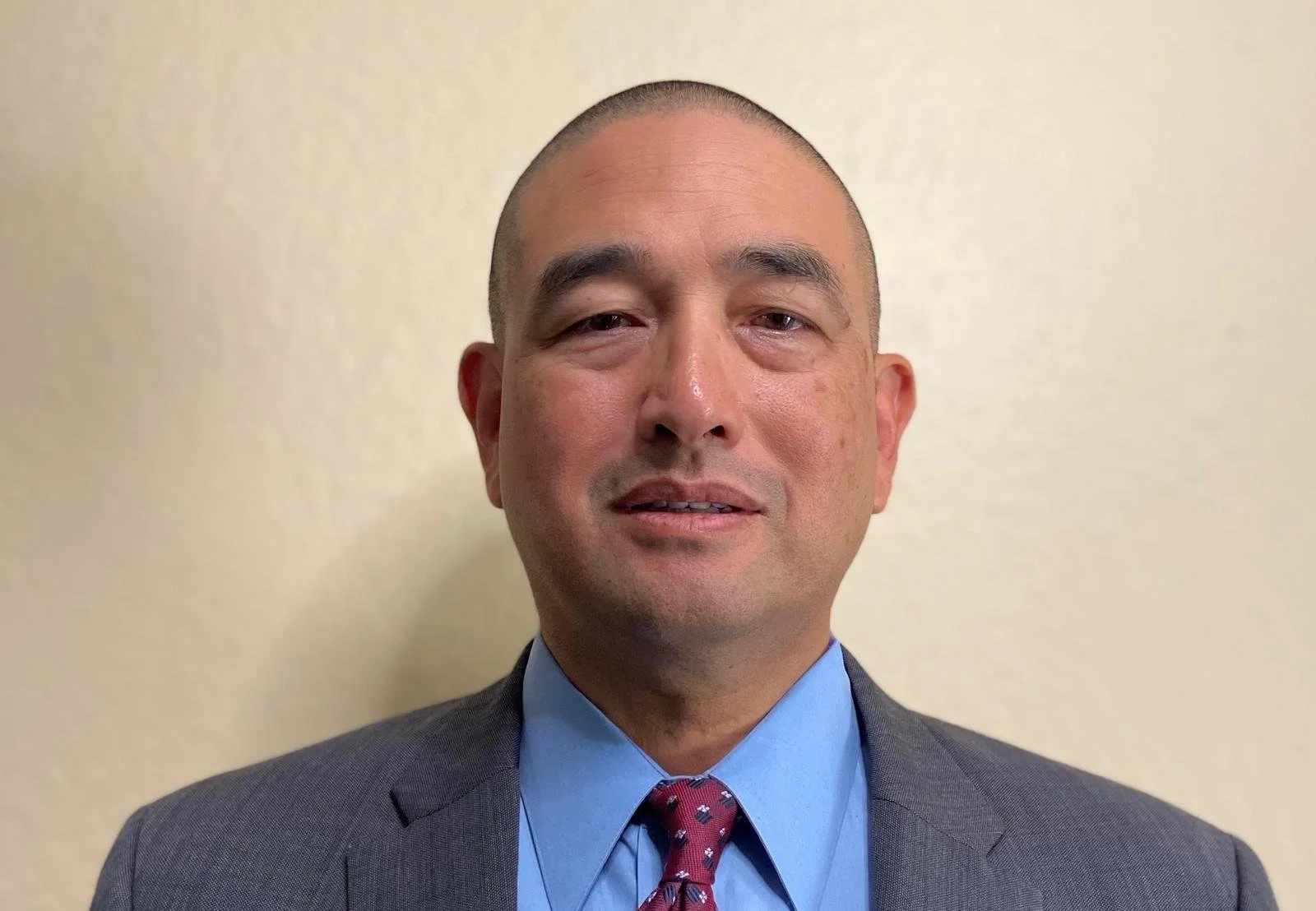
Michael Morabe: A Fire That Cannot Be Put Out
Michael Morabe’s story begins in the disciplined rhythm of a military household. His earliest memories were a rotation of bases, uniforms, and ceremonies and the structure that comes with a life lived on orders. Faith was present. Catholic prayers recited in passing, but it was never the anchor of his life. That would come later, through fire, loss, and transformation.
He joined the Air Force in 1989, later transitioning to the Air National Guard, serving over two decades in uniform. Assignments took him to Korea, Edwards Air Force Base, and three years in Europe. Each assignment added layers of technical skill, responsibility, and the kind of mental toughness few civilians could imagine. Alongside the demands of military service, he pursued education wherever he could: community colleges on base, Southwestern College, SDSU, and eventually a master’s in public administration from National University. By many measures, he was the poster child of blue-collar success—but internally, a different story was unfolding.
At age 36, Michael was deep in despair. A marriage failing, a divorce underway while deployed, and the weight of cumulative deployments pressing down. He often asked himself what it all meant. Where was the purpose beyond the uniform, beyond medals, rank, and duty?
Then came a moment that would forever change his life—a moment in the middle of the ocean, surrounded by officers who barely knew him. His superior officer had been inviting him to a Bible study for weeks, and Michael kept finding reasons to say no. Until one day, he simply ran out of excuses. Trapped in the confines of the deployed base, nowhere to hide, he finally went. A little bit of curiosity, a strong dose of obligation, and perhaps divine timing collided.
The moment of transformation at sea:
That night, on a base in the U.A.E. far from home, he reluctantly sat with the officers, some others service members and the chaplain. The Bible study was held in a small, utilitarian space, fluorescent lights buzzing faintly above the officers’ heads. Michael sat in the back, arms folded, pretending to read along, eyes darting toward the door, already planning his excuses for leaving. They were studying Romans—dense, theological, challenging. He had no idea what to expect. In the conversation, he heard about “surrender”. At first, Michael resisted, thinking “surrender” was weakness, especially to a military mindset trained in precision, strength, and control.
And then the chaplain played “Who Am I?” by Casting Crowns. The first chords echoed off the metal walls. Something in the lyrics—about identity, surrender, being held by a God bigger than yourself—hit him like a wave. Michael felt a knot in his chest unravel. Tears rolled down his cheeks in front of officers he respected, peers who could have mocked him. But no one moved. No one judged. Hands were laid on his shoulders. Prayers rose. And for the first time, the fire he had long sought in medals, rank, and discipline was replaced by a new fire, one that refused to go out. “That day changed me,” he would later recall.
Returning to San Diego, Michael tried to reconcile his newfound faith with the life he still carried. He attempted to reconnect with his wife, hoping that the spiritual awakening he had experienced would be received in kind. “This is what the Lord has done in my life,” he said. Sadly, the timing was off, and their paths diverged. She saw the transformation in him but could not yet hear it in her own heart. The divorce proceeded, a painful season of loss and longing. Years later, though, she too became a believer, and today she and her now-husband support Michael’s ministry with full hearts.
Mentorship and formation at Church of Joy, Chula Vista:
In the meantime, Michael found refuge at Church of Joy Lutheran Church, in Chula Vista, where Pastor Mike Beyer welcomed him into a community of love and support. There, a man named Phil took him under his wing and became, alongside Pastor Beyer, a faithful mentor, who shaped his spiritual formation profoundly. Every Wednesday at 6 a.m., Phil would make breakfast and walk Michael through Scripture, faith, and life. These mornings were sacred: the smell of coffee, the sound of frying eggs, quiet discussion over God’s Word before the world fully stirred. Phil disciplined him in the faith, but also cared for him, listening to doubts, acknowledging fears, and teaching the patterns of prayer and study that would become Michael’s foundation. For three years, these breakfasts became a rhythm of formation—a slow, faithful shaping that prepared him for the ministry he was yet to embrace.
Over time, however, that season began to shift. Additional deployments, the loss of his pastor, and eventually the closing and merging of Church of Joy marked the end of a chapter that had once felt so foundational. It was not a dramatic break, but a quiet drifting shaped by circumstances more than intention. Michael found himself visiting other churches, learning to listen for God’s voice in different settings, receiving unexpected blessings along the way. And yet, he never lost his sense of gratitude for those early years. The roots formed in that Lutheran community—through Pastor Beyer’s care and Phil’s steady mentorship—remained with him, shaping his theology, his instincts, and his understanding of grace. Even as his journey led him beyond those walls, he carried them with him, not as something left behind, but as something deeply planted.
Military base ministry today:
After retiring from the military and law enforcement, Michael devoted himself full-time to Cru Military. His mission: to reach all eight major military bases in San Diego County, offering Bible studies, spiritual fitness sessions, and mentorship to recruits, wounded warriors, and service members facing the same isolation he had once known.
Each week, he walks onto bases, barracks, and classrooms with a presence that is both disciplined and deeply personal. He knows the weight of boots on concrete, the stress of being away from home, the fear that creeps into moments of silence. He meets Marines-in-training who are exhausted, lonely, and scared. “They know they’ll be in harm’s way,” he observes. “I can’t give them medals or ranks, but I can help them find hope, courage, and faith in the one who never abandons them.” His approach combines military precision with genuine compassion, creating a space where vulnerability and strength coexist.
What Michael steps into each week is not confined to a single place but stretched across one of the most concentrated military regions in the country. San Diego holds eight major installations, each with its own rhythm, pressure, and population. Camp Pendleton alone carries over 155,000 military members. MCAS Miramar adds more than 15,000. At Marine Corps Recruit Depot, where much of Michael’s weekly presence is felt, over 21,000 recruits and 2,100 service members pass through a system designed to reshape them from the ground up. Naval Base Point Loma serves more than 22,000. Naval Base San Diego, the second-largest Navy fleet in the United States, holds over 20,000 personnel. Navy Base Coronado brings another 15,000, including the quiet intensity of the SEAL community. Naval Air Station North Island accounts for more than 35,000 service members. And at the Naval Medical Center—the largest military healthcare system on the West Coast—wounded warriors and recovering personnel carry a different kind of battle.
Across these spaces, Michael and his team move with intentional presence. Not everywhere at once, but steadily, faithfully—building relationships, partnering with chaplains, and stepping into moments where strength alone is not enough. In a system built to form soldiers, they are quietly helping form something deeper: men and women who are not only ready to serve, but spiritually grounded in the midst of it.
Partnership with LMSSD and answered prayer:
It was through Pastor Mike Beyer that Michael was introduced to the Lutheran Mission Society San Diego. From their first coffee together with Pastor Tardelli, there was an immediate connection—a recognition of shared mission, shared values, and a desire to see God’s kingdom advance in both military and civilian contexts. LMSSD opened doors to Lutheran congregations, helping Michael recruit volunteers for his vision of reaching military bases. In turn, Cru Military and Michael’s credibility and access to the bases allowed Lutheran missionaries a new space to serve. The partnership grew organically: Michael opened the doors of the military to volunteers, LMSSD opened the doors of churches to Michael. Up until today, 5 missionaries from various congregations have been serving under his mentoring and leadership.
Over time, Michael became more than a partner in mission—he became an answered prayer. Pastor Tardelli and his family had prayed not just for partners, but for faithful friends who would walk with them. Michael—and even his daughters—stepped into that space with grace and kindness. Through them, what began as shared mission deepened into something more personal: a friendship marked by trust, presence, and the unmistakable sense that God had been at work long before the meeting ever happened.
Michael’s story is one of transformation—through despair, deployment, divorce, and spiritual awakening. It is also a story of mentorship and relationship, showing how God works through ordinary people, small acts of care, and consistent presence. From bomb builder to spiritual mentor, he has translated his military discipline into ministry strategy, yet his heart remains soft to the vulnerabilities of those he serves.
“I devoted my life to this,” he says. “I have nothing else. This is it.” His life demonstrates that purpose is often discovered in the most unexpected places—in isolation, in failure, in surrender. What seems like the end can be the beginning of a mission greater than we ever imagined. For Michael Morabe, the uniform was never the full story; the mission God calls him to now is just as urgent, just as vital, and infinitely more enduring.