


Diego Zamorano
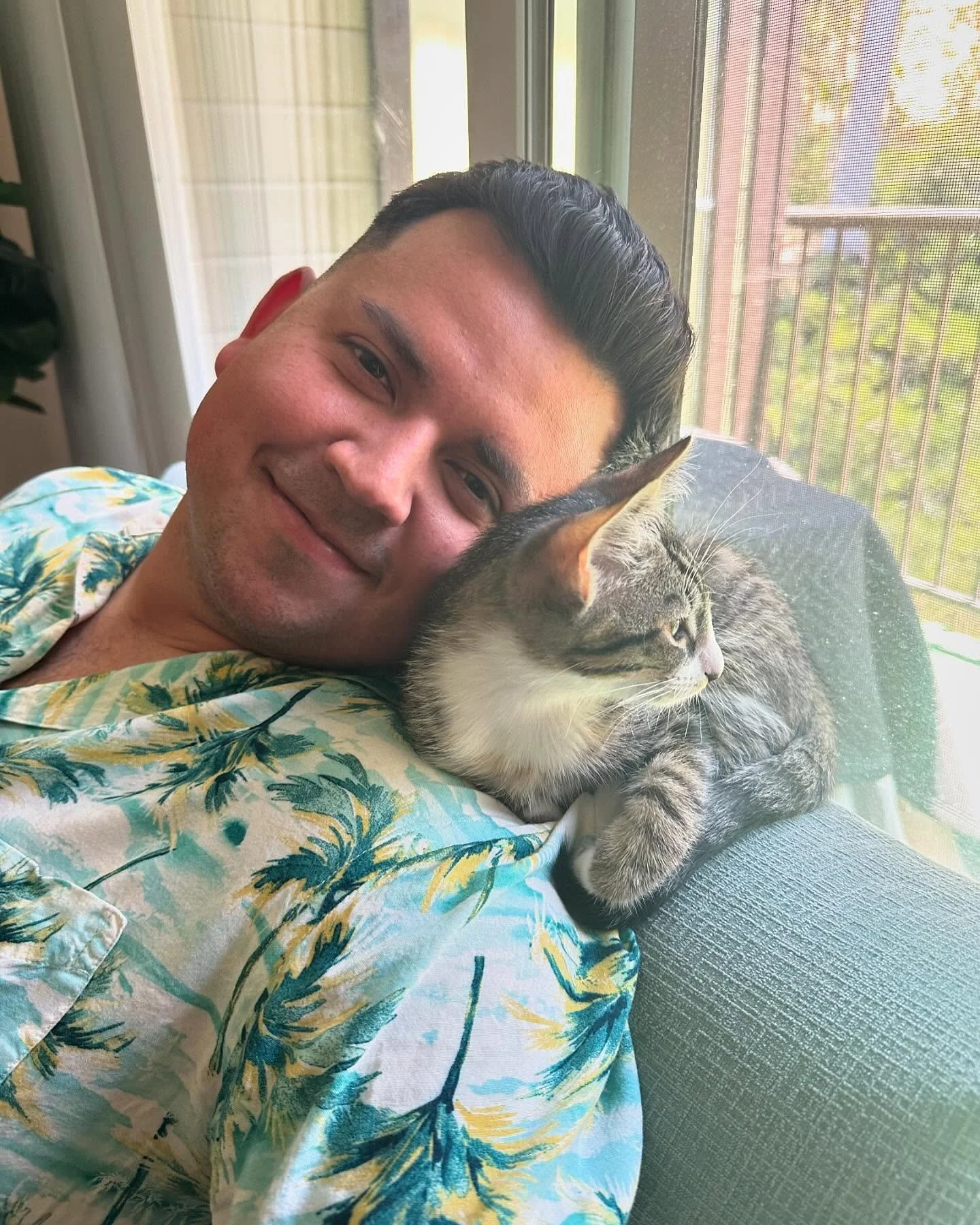
Diego Zamorano: When God Builds a New Door
I first heard about Diego Zamorano from Pastors Matt Knauss and Bob Hiller at Community Lutheran Church in Escondido/San Marcos. At the time, Diego was helping lead a newly formed men's ministry. As I began walking alongside him, I quickly discovered that behind his quiet demeanor was a remarkable story of hardship, resilience, faith, and discipleship.
Over the years, our friendship grew. We discovered a shared love for soccer, countless conversations in Spanish, and a common passion for seeing people grow in Christ. Some of our conversations centered on theology. Others centered on ministry, family, culture, and life. The more I got to know Diego, the more I realized that God had been shaping him for ministry long before he ever stepped into a leadership role.
Today, Diego serves as a leader among the young adults at Community Lutheran Church. Alongside his pastors and his wife Rachel, a Director of Christian Education, he helps organize Bible studies, retreats, fellowship gatherings, and discipleship opportunities. Yet some of his most meaningful ministry happens away from the spotlight, as he invests personally in young men, helping them navigate faith, relationships, vocation, and life with Christ at the center.
To understand why this ministry matters so much to him, you have to go back to the beginning.
Diego was born in Southern California to parents who had immigrated from Mexico. Shortly after his birth, his family returned to Mexico for several years before settling again in Orange County, where he spent the rest of his childhood.
Life was not easy.
For a time, his family lived in a garage. Later they moved into a small one-bedroom apartment. His parents worked hard to provide, and although there were struggles, Diego remembers many of the ordinary experiences of childhood. He grew up in the Catholic Church and attended Mass regularly. Looking back, he does not criticize those years. Rather, he simply acknowledges that while faith was present, the Gospel had not yet become personal to him.
Then, around the age of eight, he began noticing something was deeply wrong at home.
The conflict between his parents escalated. What began as arguments eventually became abuse. The tension that surrounded the family grew increasingly severe until the situation forced Diego, his mother, and his sister into the shelter system for victims of domestic violence. For a young boy, the experience was devastating.
He remembers feeling ashamed of depending on donations. He remembers looking at other children and wishing his life looked more like theirs. He remembers wondering why these things were happening and whether there was any hope beyond the darkness that surrounded him.
Yet even there, God was at work.
Through social workers, volunteers, and compassionate people whose names he no longer remembers, Diego experienced unexpected kindness. People gave their time. They gave clothing. They gave encouragement. More importantly, they treated him with dignity. Looking back, he recognizes those moments as some of the earliest glimpses of God's care in his life.
The instability continued. His parents separated. His mother eventually left. Years later, while Diego was finishing high school, his father also left. By the time he entered adulthood, he was carrying wounds that many people spend a lifetime trying to overcome.
The questions were unavoidable. Why me? Where was God? Does God even care? For a season, those questions had no clear answers.
Then, around the age of twenty, a simple invitation changed everything. Some Christian friends invited him to a Bible study. He had noticed something different about them. There was a peace in their lives that seemed genuine. Eventually he accepted the invitation and began attending. What he found there was not merely information about God. He found the Word of God opening his eyes.
As he listened to Scripture and spent time among believers, he experienced a profound shift in perspective. For years it would have been easy to define himself solely by the suffering he had endured. But through God's Word he began to understand something deeper. He was not only someone who had been sinned against. He was also a sinner in need of God's grace. That realization transformed him.
A passage about forgiveness deeply convicted him. He began to understand that while he bore no responsibility for the abandonment and brokenness he had experienced as a child, he was still accountable before God for his own thoughts, actions, and relationships. The Gospel freed him from living as a victim. Instead of defining himself by what others had done to him, he began defining himself by what Christ had done for him. That conviction continues to shape the way he approaches life today.
One of Diego's favorite sayings captures this beautifully. People often say that God opens doors and closes doors. Diego agrees. But then he adds something more. "My favorite thing about God is that He's also a carpenter. He can build a new door." What makes that statement especially meaningful is that Diego himself is a carpenter.
Every day he works with his hands, building, repairing, measuring, creating, and solving problems. He understands what it means to construct something where nothing existed before. And that image has become a powerful lens through which he sees God's work in his own life. Again and again, when doors seemed closed, God created a new path. When family stability disappeared, God preserved him. When hope seemed distant, God provided Christian friends. When questions seemed overwhelming, God answered through His Word. When life appeared broken beyond repair, God began building something new.
As Diego's faith matured, so did his commitment to learning. Without attending seminary, he immersed himself in Scripture and theology. His motivation was simple. "I couldn't say I loved God if I didn't know Him." So he read. He studied. He asked questions. He filled shelves with books and spent countless hours wrestling with Scripture. He engaged Christians from many traditions, always returning to one fundamental question: "What is the Gospel?" The more he studied, the more he became convinced of the beauty and clarity of the Lutheran confession of faith. What drew him was not denominational loyalty but the certainty of Christ's saving work, the proclamation of grace, and the centrality of the Gospel.
Around that same time, God brought Rachel into his life. Diego still laughs when he describes meeting her. "This was the easiest decision of my life," he says. Their relationship was built upon a shared commitment to Christ. From the beginning, they wanted God at the center of their marriage. Today they continue serving together, supporting one another and sharing a common passion for discipleship and ministry. That commitment is visible in the way they live and serve.
Together they invest in young adults who are navigating many of the same questions Diego once faced. Questions about identity, purpose, relationships, faith, and the future.
Many of the young men Diego mentors come from different backgrounds, but their struggles often sound familiar. Some wrestle with uncertainty about vocation. Others are trying to figure out what it means to be a Christian man in a culture filled with competing voices. Some are dealing with difficult family situations. Others simply need someone to walk alongside them.
Diego does not mentor from a distance. He meets over coffee. He stays after Bible studies. He takes phone calls. He asks questions. He listens carefully. He follows up. He remembers details. He challenges young men to take ownership of their faith rather than relying on someone else's convictions. Most importantly, he points them to Christ and his sufficient work in his cross for us.
Because he knows what it feels like to be lost, he can walk patiently with those who are searching. Because he knows what it feels like to experience disappointment, he can encourage those who are discouraged. Because he spent years learning to trust God's promises, he can help others do the same. Programs matter. Retreats matter. Bible studies matter. But Diego understands that transformation often happens through relationships. It happens when one believer intentionally walks alongside another and says, "Let's follow Jesus together."
That is exactly what he is doing today.
The boy who once wondered whether there was a light at the end of the tunnel now helps others find that light. The young man who searched for answers now helps others discover the Gospel. The student who taught himself theology now teaches others the Scriptures. And the carpenter who speaks about God building new doors now spends his life helping others walk through them.
Through his leadership at Community Lutheran Church, Diego is helping raise a generation of young adults who know Christ, love His Word, and serve His Church. And through it all, he continues pointing people to the Carpenter who rebuilt his life.